AlphaSteel › Blog › Reading The Caution Line
Label cautionReading the Caution Line: Pregnancy, Under 18, and “A Known Medical Condition” on the AlphaSteel Bottle
The caution printed on the AlphaSteel wrap asks three groups to consult a physician first: pregnant or nursing mothers, children under 18, and individuals with a known medical condition. For each group the published record on these seven ingredients is thin, and where it is silent that silence is not the same as safety.
Boron is the one row with an upper intake level that changes by age. The US National Center for Complementary and Integrative Health says saw palmetto may be unsafe in pregnancy or while breastfeeding. For most of the other rows, including tongkat ali and horny goat weed, this post found no trial in pregnant or nursing women or in anyone under 18. Conditions are taken one at a time, by condition and not by drug.
- The wording. “Do not exceed recommended dose” plus three groups who should ask first. It is the standard line for the category, and each group has a different kind of gap behind it.
- Boron by age. The upper limit is 3 mg a day at ages 1 to 3, 6 at 4 to 8, 11 at 9 to 13, 17 at 14 to 18 and 20 for adults. It was extrapolated from adult data, not measured in children.
- Pregnancy and nursing. One direct caution, for saw palmetto, and one documented hormone-linked report for nettle. For the rest, nothing to go on.
- Conditions. Hormone-sensitive conditions, prostate disease and PSA testing, diabetes, liver disease, kidney disease and planned surgery each get a short, sourced paragraph.
Most people skim a caution line the way they skim terms and conditions. This one is worth reading slowly, because it is the only place on the bottle that says who should stop and ask first. It sits on the left of the wrap under the suggested use and storage lines, and it is short enough to quote in full.
The caution line, word for word
The wrap reads: “CAUTION: Do not exceed recommended dose. Pregnant or nursing mothers, children under the age of 18 and individuals with a known medical condition should consult a physician before using this or any dietary supplement.” Beside it come the lines to keep the product out of the reach of children and not to use it if the safety seal is damaged or missing. The suggested use is two capsules daily with an 8 oz glass of water.
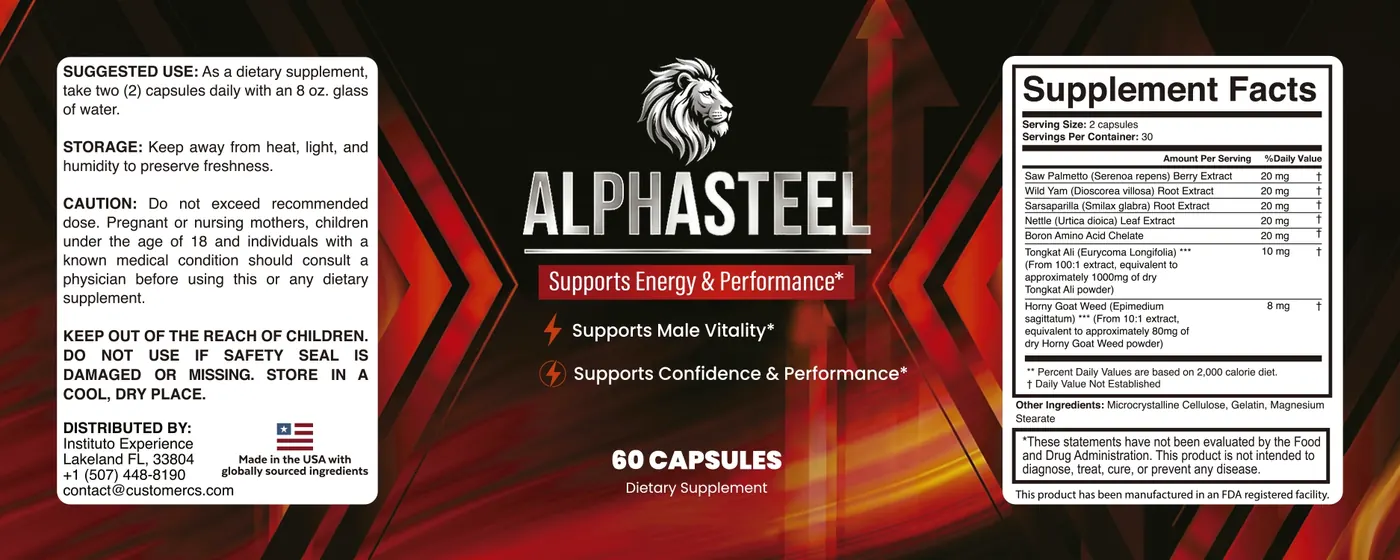
That is one instruction about the dose and three groups who should ask first. The wording is the standard one across supplements, so it says nothing specific about these seven ingredients. This post takes the line at its word and asks, for each group, what a published source can actually tell you about the plants and the boron chelate on this panel.
One boundary. The interaction checklist covers drugs, which is what many people mean by “a medical condition”: the medicine you take for it. This post stays with the people and the conditions themselves and does not repeat the drug-by-drug material.
Three kinds of silence in the literature
Before the groups, a word on what “the research says” can mean, because the phrase covers three quite different situations.
- No human data. Nobody has studied the group at all. This is the commonest situation for pregnant women, nursing mothers and children, who are rarely enrolled in supplement trials.
- Animal or laboratory data only. There is a signal, but from cells or animals, at doses and in preparations that may bear little relation to a capsule.
- Data at other doses or in other preparations. A study exists, but it used a different extract or an amount far from the label’s.
A fourth trap sits beside them, which is reading “no reports of harm” as “shown to be safe”. The Institute of Medicine’s report on boron shows how the two differ in practice. On children it says there are no reports of boron toxicity in children and adolescents and that, given the dearth of information, the limits for those ages were extrapolated from the adult value by body weight (Institute of Medicine 2001). A limit built that way is a sensible precaution. It is not a finding that children were tested at that amount and were fine.
A caution such as “may be unsafe” is a warning made without much data. A page that says nothing is an absence of research. Both are reasons to ask.
Pregnant or nursing mothers
AlphaSteel is written for men, and its front label says Supports Male Vitality, so this group is the least likely reader. The line still applies to anyone who might pick up the bottle, and bottles do get shared in households. For the seven rows, the sources fall out like this.
Saw palmetto. The National Center for Complementary and Integrative Health page on saw palmetto says the herb may be unsafe for use during pregnancy or while breastfeeding. It gives no numbers behind that line, so it is best read as a caution and not as a measured finding.
Boron. The Institute of Medicine set the same upper intake level for pregnant and lactating women as for other women of the same age: 17 mg a day at 14 to 18 years and 20 mg a day at 19 to 50. Its reasoning is worth knowing, because it is the one place on this panel where a limit comes from pregnancy itself. The adult limit was derived from developmental toxicity in rats, in which fetal weight fell at 13.3 mg/kg/day of boron and did not at 9.6 mg/kg/day. That figure was divided by an uncertainty factor of 30 and multiplied by an average adult woman’s body weight of 61 kg, and the result was rounded to 20 mg a day. The report also notes that there are no reports of boron toxicity in lactating women (Institute of Medicine 2001). The panel prints 20 mg of a boron amino acid chelate, which is the weight of the compound and not the weight of the boron inside it, so the boron content is lower than 20 mg and is not given.
Nettle. The Drugs and Lactation Database LactMed entry for stinging nettle says nettle preparations have been used by nursing mothers as a postpartum tonic and as a purported milk-supply aid, that scientific support for a milk-supply effect is minimal, and that several hormone-linked routes have been proposed: binding of sex hormone-binding globulin, histamine-induced prolactin release and serotonin-induced release of thyrotropin-releasing hormone. A case report describes a 30-year-old woman who took 500 mg of stinging nettle for a month for allergies, alongside a contraceptive implant, and developed galactorrhoea that cleared within a week of stopping it (Easton 2021). One case proves little. It is cited because it shows the hormone-linked route being taken seriously in the clinical literature. Neither source concerns a 20 mg leaf extract taken by a nursing mother.
Wild yam. The one placebo-controlled trial found in the searches for this post applied a wild yam cream to the skin of 23 menopausal women for three months and found no change in estradiol, progesterone or FSH (Komesaroff 2001). A separate screening study tested more than 150 herbs for how strongly they bind oestrogen and progestin receptors, and included wild Mexican yam products containing diosgenin among the things it tested in people (Zava 1998). Neither study is about pregnancy or lactation, and neither looked at a capsule.
Tongkat ali, horny goat weed and sarsaparilla. The PubMed and Europe PMC searches run for this post in September 2026 turned up no trial or safety study of these three in pregnant or nursing women. That is a statement about the search. It is not proof that nothing exists, and it is certainly not evidence of safety.
Under 18
The label says children under the age of 18, and the seven rows are, on the evidence, adult-tested if they are tested at all. Two things can be said with some precision, and one has to be said as a gap.
Boron is the one row with a limit that changes by age. The Institute of Medicine’s tolerable upper intake levels for boron, meaning the highest daily intake likely to pose no risk of adverse effects for almost everyone in the group, are these (Institute of Medicine 2001).
| Age or group | Upper level, mg of boron a day |
|---|---|
| 0 to 12 months | Not possible to establish; intake should come from food and formula only |
| 1 to 3 years | 3 |
| 4 to 8 years | 6 |
| 9 to 13 years | 11 |
| 14 to 18 years | 17 |
| 19 years and over | 20 |
| Pregnancy and lactation, 14 to 18 years | 17 |
| Pregnancy and lactation, 19 to 50 years | 20 |
Source: Institute of Medicine, Dietary Reference Intakes for Vitamin A, Vitamin K, Arsenic, Boron, Chromium, Copper, Iodine, Iron, Manganese, Molybdenum, Nickel, Silicon, Vanadium, and Zinc (2001). The adult figure is the one the boron post discusses; it appears here only as the top row of the age table.
Three points on that table. First, the values for children and adolescents were not measured in children. The report says they were scaled down from the adult figure by reference body weights. Second, the limits are for boron itself, from all sources, and the AlphaSteel panel prints the weight of a boron amino acid chelate, so the boron in a serving is lower than the number on the panel and is not stated. Third, that makes the printed 20 mg a poor guide for a young person either way. If the whole 20 mg were boron, it would sit above the limits for ages 9 to 13 and 14 to 18. Because it is a chelate weight, it may well be lower. The panel cannot settle it, which is one good reason the line says under 18 should not take it.
The other rows have no paediatric evidence to point to. The searches run for this post found no randomised trial or safety study of saw palmetto, tongkat ali or horny goat weed in people under 18. The same searches turned up nothing for nettle leaf extract, wild yam or sarsaparilla in that age group. The plants are marketed for adult men, and several have hormone-related claims or laboratory activity: tongkat ali is studied for testosterone in adult men, an Epimedium extract has been described as strongly oestrogenic in cell assays, and wild yam is discussed in the hormone-screening literature. No study that came up tests what any of that would mean in a growing adolescent. That is a gap, and it is the reason to read the line as written.
The practical points are ordinary ones. Store the bottle where a child cannot reach it, as the label says, and do not use it if the safety seal is missing.
“A known medical condition”, condition by condition
The third group is the broadest, and the label does not narrow it. A useful way to make it concrete is to go through the conditions where a specific ingredient on this panel has something in the literature, and to say in each case what that something is and how far it reaches. Each entry is short, and each ends in the same place, which is a conversation with the person who knows your history.
Hormone-sensitive conditions. This covers any condition whose course depends on sex hormones or that is treated by changing them, and men who take testosterone or a drug that lowers it. Four of the seven rows have something in the literature that touches hormones, and the signals point in different directions. A 2022 meta-analysis of randomised trials found higher total testosterone in men given tongkat ali, a standardised mean difference of 1.352 across five trials (Leisegang 2022). Extracts of Epimedium, the genus that horny goat weed belongs to, have been described as strongly oestrogenic in cell-based assays because of their prenylflavones (Yong 2007); in a 24-month trial in 100 postmenopausal women, a preparation supplying 60 mg of icariin with 15 mg of daidzein and 3 mg of genistein a day preserved bone density and showed no detectable endometrial hyperplasia (Zhang 2007), which is a far larger amount from a different preparation than 8 mg of a 10:1 extract. Wild yam and nettle appear in the pregnancy section above. None of this settles anything at the label’s amounts. It is the kind of material a person with a hormone-sensitive condition, and the clinician managing it, would want to have seen.
Prostate disease and PSA testing. Saw palmetto is the row aimed at the same gland, so this is the condition closest to home. Two sources speak to PSA. The STEP trial measured serum PSA over a year in men given saw palmetto or placebo and found no significant difference (Bent 2006), and the National Center for Complementary and Integrative Health says saw palmetto does not appear to affect PSA readings even when taken in higher than usual amounts. That is reassuring, and it concerns saw palmetto at 320 mg a day. Nobody has measured PSA in men taking this seven-row capsule. The wider point is screening. The US Preventive Services Task Force’s 2018 statement concludes that the net benefit of PSA-based screening for men aged 55 to 69 is small for some men and lists frequent false-positive results among the harms (USPSTF 2018). A man in that conversation, or being followed for a prostate condition, should put every supplement on the table, since whoever reads a PSA or a symptom score needs to know what else is in play. New urinary symptoms call for evaluation. The label makes no claim about them.
Diabetes. The nettle row is a leaf extract, and the leaf has been tested in people with type 2 diabetes. In one randomised trial, 46 patients needing insulin took a 500 mg nettle leaf extract capsule every 8 hours for three months on top of their usual oral drugs, and their fasting glucose, two-hour postprandial glucose and HbA1c ended lower than in 46 patients on placebo (P < 0.001, 0.009 and 0.006) (Kianbakht 2013). Another trial in 50 people with type 2 diabetes used 100 mg of a hydro-alcoholic nettle extract per kilogram of body weight a day for eight weeks and found lower IL-6 and hs-CRP than in the control group (Namazi 2011). Set those beside the label: 20 mg of leaf extract a serving is one seventy-fifth of the first trial’s 1,500 mg a day, and for a man weighing 80 kg the second trial’s dose works out at 8 g a day. Nothing here suggests 20 mg does the same. The studied direction, though, is toward lower glucose, so anyone whose blood sugar is being managed has a reason to mention a new supplement, so that a change in readings has a possible explanation.
Liver disease. A 2024 case report describes a 47-year-old man who developed acute liver injury with jaundice shortly after starting tongkat ali and improved after stopping it; the authors called it the first reported case of its kind (Kaliounji 2024). A 2016 review of the plant’s toxicology, by contrast, says liver and kidney function tests showed no adverse changes at normal daily doses and with chronic use (Rehman 2016). One case report and one narrative review are weak evidence in opposite directions. For someone with a known liver condition, they are enough to ask.
Kidney disease. Boron is absorbed almost completely, about 90 per cent at ordinary intakes, and leaves mainly in the urine; in one 42-day study of men, urinary loss was 86 per cent of intake (Institute of Medicine 2001). The kidneys are therefore the exit route. The report’s upper limit does not say how it applies to reduced kidney function, and a 2025 review names renal failure, with pregnancy, among the sensitive groups where data are lacking (Bartusik-Aebisher 2025). A chelate weight of 20 mg is not a boron dose, but the point for a person with kidney disease is the same as for the other conditions here: the route out matters, and nobody has studied this capsule in that setting.
Planned surgery. A 2001 review in JAMA on herbal medicines and perioperative care concluded that physicians should explicitly ask about and document herbal use before surgery (Ang-Lee 2001). It covered eight herbs, none of them on this panel. In a small experiment, 10 volunteers took each of five commercial herbal products in turn, saw palmetto among them, for two weeks at a time while platelet function was measured; none of the herbs changed it, while aspirin did (Beckert 2007). That is one row out of seven, in 10 people. For the others there is no equivalent study, so the ordinary rule applies: tell the surgical team what you take and ask them when to stop.
AlphaSteel, with the caution printed on the bottle
Two capsules a day, 60 capsules to a bottle, with the amounts and the caution on the label.
Order AlphaSteelGroup by group, in one table
Everything above, compressed. The right-hand column matters as much as the middle one.
| Group | What the sources say | Where the record is silent |
|---|---|---|
| Pregnant or nursing mothers | Saw palmetto: NCCIH says it may be unsafe. Boron: upper limit unchanged in pregnancy and lactation, set from rat developmental data. Nettle: hormone-linked routes proposed; one galactorrhoea case report. | Tongkat ali, horny goat weed, sarsaparilla, wild yam taken by mouth: no trial or safety study found. |
| Under 18 | Boron upper limit falls with age: 3, 6, 11 and 17 mg a day across 1 to 18 years, scaled from adults. | No trial or safety study found in this age group for any of the other rows. |
| Hormone-sensitive conditions | Tongkat ali raises total testosterone in trials; Epimedium extracts are oestrogenic in the laboratory. | What any of that means at the label’s amounts. |
| Prostate disease and PSA | Saw palmetto did not change PSA in a one-year trial at 320 mg a day. | PSA in men taking the finished capsule. |
| Diabetes | Nettle leaf extract lowered glucose measures at 1,500 mg a day in one trial, and inflammatory markers at 100 mg/kg a day in another. | Whether 20 mg does anything to glucose. |
| Liver disease | One tongkat ali liver-injury case report; a review reporting no adverse liver tests at normal doses. | Any systematic safety data in liver disease. |
| Kidney disease | Boron leaves mainly in the urine. | How the upper limit applies with reduced kidney function. |
| Planned surgery | Saw palmetto did not change platelet function in 10 volunteers. | The other six rows. |
Sources are those cited in the sections above. “Found” refers to the searches run for this post in September 2026.
Taking the line to an appointment
The caution line is an invitation to a short conversation, and it goes better with a little preparation.
- Bring the bottle, or a photo of the whole wrap. The panel gives the seven names and amounts, and the wrap gives the caution and the suggested use. That is everything a pharmacist or physician needs to start.
- Say which group you are in. Pregnant or nursing, under 18, or a named condition. Then ask the one question that matters for that group, such as whether the boron chelate adds to what you already get from other supplements.
- List every other supplement and medicine. Multivitamins and mineral products can carry boron too, and two men’s formulas can share ingredient names. The interaction checklist covers the drug side.
- Stay at the printed dose. Two capsules a day with a glass of water is what the label says, and “do not exceed recommended dose” comes first in the caution.
If none of the three groups describes you, the line still stands as a reminder that a supplement is a product you are choosing to add to your routine, and that the evidence on it, for this capsule, is what the other posts on this blog describe. The post on evidence for the whole formula covers why no trial can yet speak for the seven together.
AlphaSteel is a dietary supplement, not a medicine. It is not a treatment for a prostate condition, diabetes, a hormone condition or any other disease, and this post is not medical advice. If you are pregnant or nursing, under 18, or have a medical condition, speak to a physician before use, as the label itself asks.
Sources behind this AlphaSteel article
- Institute of Medicine (US) Panel on Micronutrients. Dietary Reference Intakes for Vitamin A, Vitamin K, Arsenic, Boron, Chromium, Copper, Iodine, Iron, Manganese, Molybdenum, Nickel, Silicon, Vanadium, and Zinc. Chapter 13, Arsenic, Boron, Nickel, Silicon, and Vanadium. Washington (DC): National Academies Press; 2001. doi:10.17226/10026. Book chapter, not a PubMed article. https://nap.nationalacademies.org/read/10026/chapter/15
- National Center for Complementary and Integrative Health. Saw palmetto. Page read September 27, 2026. https://www.nccih.nih.gov/health/saw-palmetto
- Drugs and Lactation Database (LactMed). Stinging Nettle. Bethesda (MD): National Institute of Child Health and Human Development. Bookshelf ID NBK501777. PMID 30000836. https://pubmed.ncbi.nlm.nih.gov/30000836/
- Easton L, Vaid S, Nagel AK, Venci JV, Fortuna RJ. Stinging nettle (Urtica dioica): an unusual case of galactorrhea. Am J Case Rep. 2021;22:e933999. doi:10.12659/AJCR.933999 PMID 34876549. https://pubmed.ncbi.nlm.nih.gov/34876549/
- Komesaroff PA, Black CV, Cable V, Sudhir K. Effects of wild yam extract on menopausal symptoms, lipids and sex hormones in healthy menopausal women. Climacteric. 2001;4(2):144-50. PMID 11428178. https://pubmed.ncbi.nlm.nih.gov/11428178/
- Zava DT, Dollbaum CM, Blen M. Estrogen and progestin bioactivity of foods, herbs, and spices. Proc Soc Exp Biol Med. 1998;217(3):369-78. doi:10.3181/00379727-217-44247 PMID 9492350. https://pubmed.ncbi.nlm.nih.gov/9492350/
- Leisegang K, Finelli R, Sikka SC, Panner Selvam MK. Eurycoma longifolia (Jack) improves serum total testosterone in men: a systematic review and meta-analysis of clinical trials. Medicina (Kaunas). 2022;58(8):1047. doi:10.3390/medicina58081047 PMID 36013514. https://pubmed.ncbi.nlm.nih.gov/36013514/
- Yong EL, Wong SP, Shen P, Gong YH, Li J, Hong Y. Standardization and evaluation of botanical mixtures: lessons from a traditional Chinese herb, Epimedium, with oestrogenic properties. Novartis Found Symp. 2007;282:173-88. doi:10.1002/9780470319444.ch12 PMID 17913231. https://pubmed.ncbi.nlm.nih.gov/17913231/
- Zhang G, Qin L, Shi Y. Epimedium-derived phytoestrogen flavonoids exert beneficial effect on preventing bone loss in late postmenopausal women: a 24-month randomized, double-blind and placebo-controlled trial. J Bone Miner Res. 2007;22(7):1072-9. doi:10.1359/jbmr.070405 PMID 17419678. https://pubmed.ncbi.nlm.nih.gov/17419678/
- Bent S, Kane C, Shinohara K, Neuhaus J, Hudes ES, Goldberg H, et al. Saw palmetto for benign prostatic hyperplasia. N Engl J Med. 2006;354(6):557-66. doi:10.1056/NEJMoa053085 PMID 16467543. https://pubmed.ncbi.nlm.nih.gov/16467543/
- US Preventive Services Task Force; Grossman DC, Curry SJ, Owens DK, Bibbins-Domingo K, Caughey AB, Davidson KW, et al. Screening for prostate cancer: US Preventive Services Task Force recommendation statement. JAMA. 2018;319(18):1901-13. doi:10.1001/jama.2018.3710 PMID 29801017. https://pubmed.ncbi.nlm.nih.gov/29801017/
- Kianbakht S, Khalighi-Sigaroodi F, Dabaghian FH. Improved glycemic control in patients with advanced type 2 diabetes mellitus taking Urtica dioica leaf extract: a randomized double-blind placebo-controlled clinical trial. Clin Lab. 2013;59(9-10):1071-6. doi:10.7754/clin.lab.2012.121019 PMID 24273930. https://pubmed.ncbi.nlm.nih.gov/24273930/
- Namazi N, Esfanjani AT, Heshmati J, Bahrami A. The effect of hydro alcoholic nettle (Urtica dioica) extracts on insulin sensitivity and some inflammatory indicators in patients with type 2 diabetes: a randomized double-blind control trial. Pak J Biol Sci. 2011;14(15):775-9. doi:10.3923/pjbs.2011.775.779 PMID 22303583. https://pubmed.ncbi.nlm.nih.gov/22303583/
- Kaliounji A, Shadid G, Saba H, Ahlawat S. A rare case of tongkat ali-induced liver injury: a case report. Cureus. 2024;16(3):e56639. doi:10.7759/cureus.56639 PMID 38646387. https://pubmed.ncbi.nlm.nih.gov/38646387/
- Rehman SU, Choe K, Yoo HH. Review on a traditional herbal medicine, Eurycoma longifolia Jack (tongkat ali): its traditional uses, chemistry, evidence-based pharmacology and toxicology. Molecules. 2016;21(3):331. doi:10.3390/molecules21030331 PMID 26978330. https://pubmed.ncbi.nlm.nih.gov/26978330/
- Bartusik-Aebisher D, Rudy I, Rogóż K, Aebisher D, Henrykowska G. Boron in diet and medicine: mechanisms of delivery and detection. Pharmaceuticals (Basel). 2025;19(1):81. doi:10.3390/ph19010081 PMID 41599680. https://pubmed.ncbi.nlm.nih.gov/41599680/
- Ang-Lee MK, Moss J, Yuan CS. Herbal medicines and perioperative care. JAMA. 2001;286(2):208-16. doi:10.1001/jama.286.2.208 PMID 11448284. https://pubmed.ncbi.nlm.nih.gov/11448284/
- Beckert BW, Concannon MJ, Henry SL, Smith DS, Puckett CL. The effect of herbal medicines on platelet function: an in vivo experiment and review of the literature. Plast Reconstr Surg. 2007;120(7):2044-50. doi:10.1097/01.prs.0000295972.18570.0b PMID 18090773. https://pubmed.ncbi.nlm.nih.gov/18090773/
AlphaSteel, with every amount printed on the label
Two capsules a day, 60 capsules to a bottle, and seven actives with their milligrams on the panel.
Order AlphaSteel