AlphaSteel Official Website › Blog › Boron At 20 mg
Ingredient rowBoron Amino Acid Chelate at 20 mg: What the Small Human Studies Measured, and What the Row Leaves Out
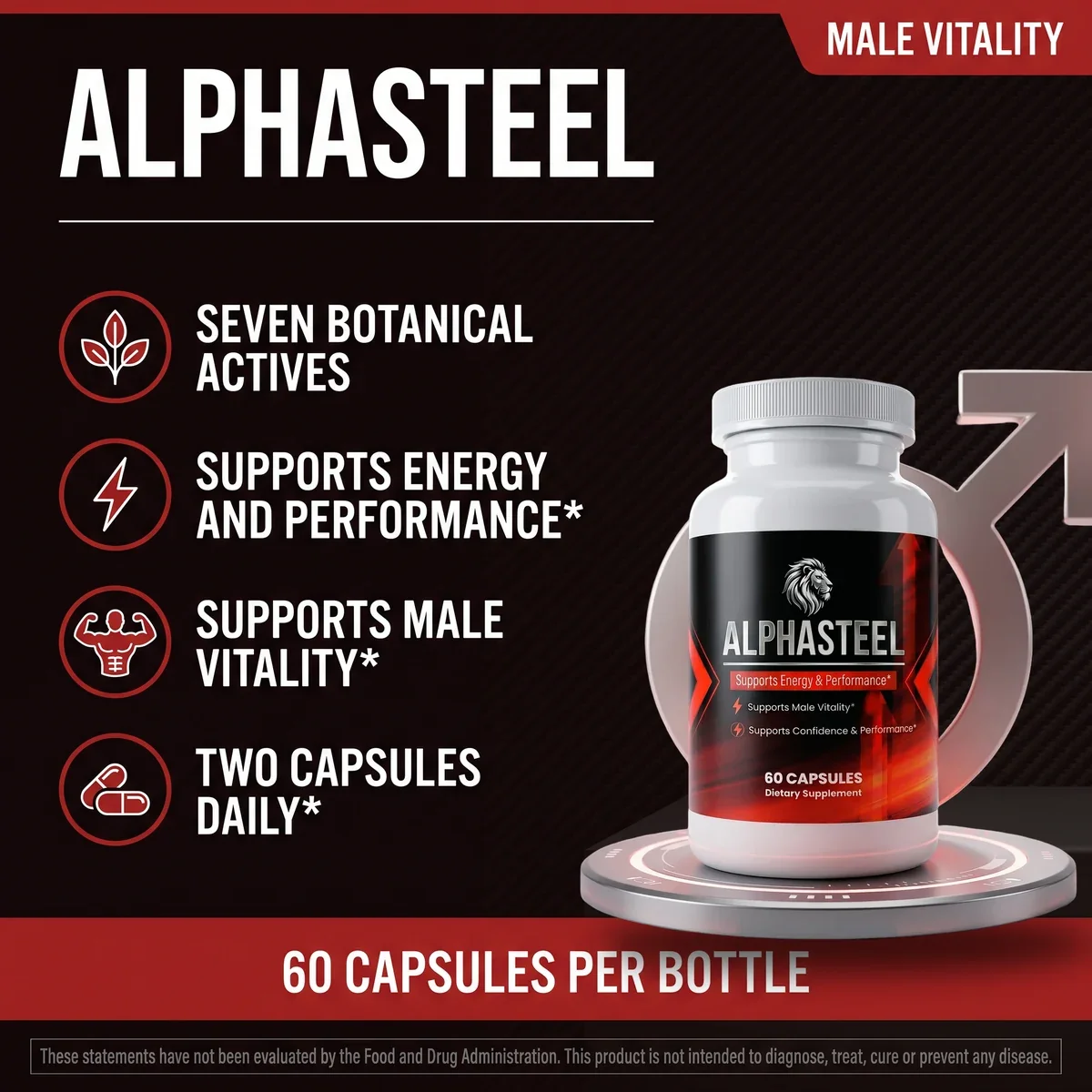
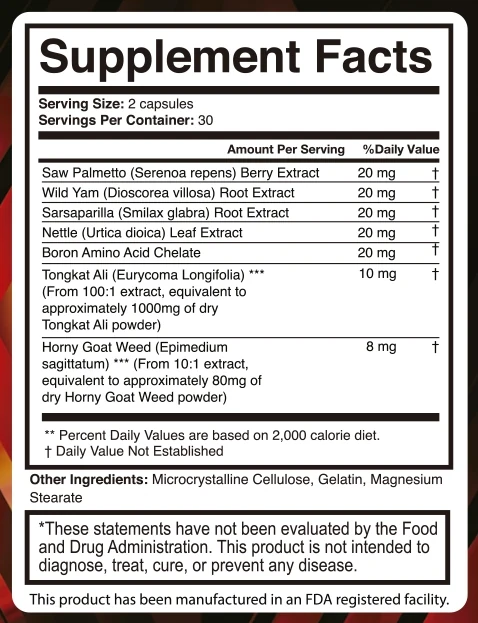
The AlphaSteel panel prints boron as “Boron Amino Acid Chelate” at 20 mg per serving. That is the weight of the compound, boron bound to an amino acid, so the boron inside it is less than 20 mg and the panel does not say how much less. The human studies this desk found used 2.5, 3 and 10 mg of boron itself, and one food-record study found people eating an ordinary diet took in about 2 mg a day.
This post sets out what those studies measured, what they cannot tell you, and the one number the label leaves for you to ask about.
- 20 mg of chelate. The label weight of the compound. It includes the amino acid, so it is an upper bound on the boron and not a measure of it.
- About 2 mg a day. Dietary boron in one Australian food-record study, which averaged 2.23 mg a day.
- Three small studies. At 2.5 mg, 3 mg and 10 mg of boron, in bodybuilders, postmenopausal women and eight healthy men. Their results do not agree.
- An upper limit exists. The adult upper intake level is 20 mg a day; no reference intake has been set.
The boron row on the panel
Of the seven rows on the AlphaSteel Supplement Facts panel, six name a plant and one names a mineral. The fifth row reads “Boron Amino Acid Chelate”, and the amount is 20 mg per serving of two capsules, with the dagger that means Daily Value not established. Over a 30-serving bottle, that is 600 mg of the chelate.
The wording matters. The row does not say “Boron 20 mg”. It gives the weight of a compound in which boron is bound to an amino acid, a chelate, in which the mineral is held by a larger molecule. The panel does not name the amino acid, does not print the share of the weight that is boron, and offers no absorption data. What it does print, honestly, is the amount of chelate in the capsule.
That distinction is the whole of this post. Studies of boron report the element itself, in milligrams. A chelate row reports a compound. To set one beside the other you need a figure the panel does not give.
What boron is, and where you already get it
Boron is a trace element found in plants, and so in the plant foods people eat. A survey of the boron content of 66 foods eaten in Australia found the main sources to be nuts, dried fruits, legumes, fresh vegetables and fruits. Using seven-day weighed food records from 32 people, the same group put the average daily intake at 2.23 mg, with a standard deviation of 1.23 mg (Naghii 1996). That figure is a useful anchor: an ordinary diet supplies roughly two milligrams of boron a day, and some people much less or more.
No dietary reference intake has been set for boron. A review of the mineral notes that there are no estimated average requirements or recommended intakes, only an upper intake level of 20 mg a day for adults aged 18 and over. The same review argues for considering 3 mg a day for people whose diets lack fruit and vegetables, so it reads as a case for supplementation and is best taken as one informed opinion, not a consensus (Pizzorno 2015). Its useful contribution here is the statement of the figures: no requirement, one ceiling.
Three small studies, at three doses
The human work that touches the theme of this label, boron and male hormones, is small, and it sits at three quite different doses. All three doses are amounts of boron, not of a compound.
The oldest study used a metabolic unit. Twelve postmenopausal women aged 48 to 82 ate a conventional diet supplying about 0.25 mg of boron a day for 119 days, and were then given 3 mg a day. Boron reduced their urinary excretion of calcium and magnesium and raised their serum oestradiol and testosterone. The authors wrote that 3 mg is an amount commonly found in diets high in fruits and vegetables (Nielsen 1987). The participants were women, the diet was tightly controlled and the baseline intake was very low, so it says little about a man eating normally.
The second study is in men, and its result is a null. Nineteen male bodybuilders aged 20 to 27 took 2.5 mg of boron or placebo daily for seven weeks. Their plasma boron rose, and boron had no significant effect on total or free testosterone, lean body mass or strength. Both groups gained testosterone, muscle and strength, which the authors put down to seven weeks of training (Ferrando 1993).
The third study gave the largest dose and the most interesting result. Eight healthy men took a placebo with breakfast on day 0, then a capsule containing 10 mg of boron on day 1 and each morning for a week. Plasma boron rose quickly. Within six hours of the first capsule, sex hormone binding globulin, high-sensitivity C-reactive protein and TNF-alpha had fallen. After a week, mean free testosterone was up, oestradiol was down, and dihydrotestosterone, cortisol and vitamin D were higher, while the three inflammatory markers had fallen. The authors described it as, to their knowledge, the first human report of an increase in free testosterone after boron (Naghii 2011).
How to weigh the three
The 2011 result is the one most often repeated, and it deserves the most caution. It was eight men, for a week, with no separate placebo group beyond a single placebo dose on the first day, and the week-long blood samples were taken at one time of day. It measured hormone levels, not how anyone felt or functioned, and hormone levels move for many reasons. It has not, in this desk’s searches, been repeated in a larger trial. The 1993 study, at a quarter of the dose in trained men, found nothing, and the 1987 study was in women. Taken together, the studies say that boron is biologically active at low doses and that its effect on male hormones in normal men is not established.
The 20 mg beside the doses studied
| Source | Amount | Who | What is being counted |
|---|---|---|---|
| Ordinary diet (Naghii 1996) | About 2.2 mg a day | 32 free-living people, Australia | Boron in food |
| Nielsen 1987 | 3 mg a day | 12 postmenopausal women, a low-boron diet | Boron |
| Ferrando 1993 | 2.5 mg a day | 19 male bodybuilders, seven weeks | Boron |
| Naghii 2011 | 10 mg a day | 8 healthy men, one week | Boron |
| Upper intake level (Pizzorno 2015) | 20 mg a day | Adults 18 and over | Boron, from all sources |
| AlphaSteel label | 20 mg per two capsules | No published trial of the finished product | Weight of the chelate, boron content not printed |
Amounts are taken from the abstracts of the cited papers. Whether the upper level is stated as boron is set out in the text; the label figure is a compound weight.
The right-hand column is what stops the comparison. Every other figure in the table is boron. The label figure is not, and it is necessarily larger than the boron it carries, because the amino acid is part of the weight. So the boron in a serving is somewhere below 20 mg, and the panel offers no way to say where.
A little arithmetic shows why that matters. For the label to supply the 10 mg of boron used in the eight-man study, half of the chelate’s weight would have to be boron. For it to supply the 2.5 mg of the bodybuilding study, an eighth would. Nothing on the panel says which of those is nearer the truth, or whether both are far off. It could be a good deal less than either, and the supplier will know.
Three ways to read the 20 mg
Since the panel does not print the boron share, the only honest way to use the number is to try a few plausible shares and see what each implies. The table below does that. The percentages are illustrations chosen by this desk to show the range of outcomes; they are not claims about this chelate, whose boron content is not printed.
| Boron share of the chelate | Boron in one serving | Plus the dietary average of 2.23 mg | Against the 20 mg upper level |
|---|---|---|---|
| 12.5 per cent | 2.5 mg | About 4.7 mg | Well below |
| 25 per cent | 5 mg | About 7.2 mg | Below |
| 50 per cent | 10 mg | About 12.2 mg | Below, with less room for other sources |
Arithmetic only: 20 mg multiplied by the share, then added to the 2.23 mg average from Naghii 1996. One serving a day is assumed.
Even at the top of that range, one serving is under the upper level, and at the bottom it is about the amount the bodybuilding study used. So the row is unlikely to be a safety problem on its own, whatever the true figure is. What the table cannot tell you is whether the row is doing anything, since the one study in men that reported a rise in free testosterone used 10 mg, which is the top of that range. If you were hoping the boron row does what that study measured, you would want the higher share to be true, and only the supplier can say.
AlphaSteel, with every amount on the label
Two capsules a day, 60 to a bottle. Seven actives with their milligrams printed, tongkat ali and horny goat weed with their ratios. $49 to $79 a bottle and 60 days from purchase to change your mind.
Order AlphaSteelWhat the dagger means when there is no requirement
Every row on the AlphaSteel panel carries a dagger, and the footnote reads “Daily Value Not Established”. For the six plant rows that is unremarkable, since plants have no daily values. For boron it deserves a sentence, because it is a mineral, and minerals usually have targets. The absence here is real: the review cited above reports that no estimated average requirement or recommended intake exists for boron, only the upper ceiling.
In practice that means there is no percentage to print and no deficiency threshold to point to. A label cannot tell you that 20 mg is 40 per cent of what you need, because nobody has said what you need. It also means claims that a person is “short” of boron cannot be checked against an official standard. The label is right to print a dagger, and a reader is right to treat any confident statement about boron requirements, from any seller, with some caution.
Why the upper limit still belongs in the conversation
The adult upper intake level is 20 mg a day, as the review above reports it, and as this website’s interaction checklist states it, in terms of boron, with the NIH Office of Dietary Supplements as its source. A chelate that weighs 20 mg per serving cannot on its own take a person past it, and the label’s own instruction not to exceed the dose adds a second guard. The practical point is stacking. Boron can also be in a multivitamin or another supplement, and a person who takes several may reach a total nobody added up. The interaction checklist makes the same point briefly, and it is the one part of the boron discussion that is a plain arithmetic check you can do yourself.
For context on how high boron exposure can go without an obvious hormonal signal, one occupational study followed 212 men working with boron. In the group with the highest exposure, 98 workers averaged 47 mg of boron a day, with a range of about 8 to 107 mg, and the study found no boron-associated adverse effects on semen parameters, FSH, LH or total testosterone (Duydu 2018). That is a study of workplace exposure, not of a supplement, and it is no guide to what anyone should take. It was looking for harm, not benefit, so it says nothing either way about the 2011 finding.
What the label does and does not claim
The AlphaSteel front label makes three statements, supports energy and performance, supports male vitality, and supports confidence and performance, with the usual asterisk and FDA statement. It makes no statement about testosterone, and this website does not either. This website has also found no published trial of AlphaSteel as a finished product, so nothing here can tell you how the boron row behaves alongside the other six.
The boron row is best read as one of seven, and the one where the missing number is most easy to fill in. The supplier will have a specification for the chelate, including its boron content, and a reasonable customer can ask for it. This website cannot see the supplier’s certificate of analysis, and the lot and certificate numbers printed on its pages are for tracing a bottle, not laboratory proof.
Questions to put to any mineral chelate row
- How much of the mineral is in it? Ask for the elemental amount per serving. That is the number to compare with research and with an upper limit.
- Which amino acid, and what ratio? A chelate is two things bound together. The weight of the second one is subtracted from what you get of the first.
- Is there any evidence the chelate is better absorbed? The abstracts do not say that any of the studies above used this chelate, so they do not answer it. If the supplier has data, it should be able to say what was measured.
- What else am I taking? Add the boron from every source. Twenty milligrams a day from all sources is the ceiling.
- What was actually measured? Hormone levels in a few men are not the same as how a man feels or performs, and none of the three studies measured the latter.
None of this is a reason to avoid the row. It is a reason to know what the number means. The ingredients page takes all seven rows in the same way, and the Supplement Facts page reproduces the panel line by line.
AlphaSteel is a dietary supplement, not a medicine. It is not a treatment for low testosterone, bone loss or any other condition, and it is not a substitute for prescribed medicine. The research cited here concerns boron on its own, at other amounts, in small groups of people. Speak to your prescriber before use if you take any prescription, and tell them about every other supplement that contains boron.
Sources behind this AlphaSteel article
- Naghii MR, Wall PM, Samman S. The boron content of selected foods and the estimation of its daily intake among free-living subjects. J Am Coll Nutr. 1996;15(6):614-9. doi:10.1080/07315724.1996.10718638 PMID 8951740. https://pubmed.ncbi.nlm.nih.gov/8951740/
- Nielsen FH, Hunt CD, Mullen LM, Hunt JR. Effect of dietary boron on mineral, estrogen, and testosterone metabolism in postmenopausal women. FASEB J. 1987;1(5):394-7. PMID 3678698. https://pubmed.ncbi.nlm.nih.gov/3678698/
- Ferrando AA, Green NR. The effect of boron supplementation on lean body mass, plasma testosterone levels, and strength in male bodybuilders. Int J Sport Nutr. 1993;3(2):140-9. doi:10.1123/ijsn.3.2.140 PMID 8508192. https://pubmed.ncbi.nlm.nih.gov/8508192/
- Naghii MR, Mofid M, Asgari AR, Hedayati M, Daneshpour MS. Comparative effects of daily and weekly boron supplementation on plasma steroid hormones and proinflammatory cytokines. J Trace Elem Med Biol. 2011;25(1):54-8. doi:10.1016/j.jtemb.2010.10.001 PMID 21129941. https://pubmed.ncbi.nlm.nih.gov/21129941/
- Pizzorno L. Nothing Boring About Boron. Integr Med (Encinitas). 2015;14(4):35-48. PMID 26770156. https://pubmed.ncbi.nlm.nih.gov/26770156/
- Duydu Y, Başaran N, Aydın S, Üstündağ A, Yalçın CÖ, Anlar HG, et al. Evaluation of FSH, LH, testosterone levels and semen parameters in male boron workers under extreme exposure conditions. Arch Toxicol. 2018;92(10):3051-3059. doi:10.1007/s00204-018-2296-7 PMID 30143848. https://pubmed.ncbi.nlm.nih.gov/30143848/
Order AlphaSteel, with the boron question asked first
Two capsules a day, seven actives with their milligrams printed, and 60 days from purchase to decide.
$49 to $79 a bottle · free US shipping on three and six bottles · 60 days to change your mind
Order AlphaSteel On The Official Website60-day money-back guarantee · lot ALP-26/AL-7266 · payment on the seller’s checkout