AlphaSteel › Blog › Seven Ingredients, No Formula Trial
Formula-level evidenceSeven Ingredients, No Formula Trial: What Evidence for the Parts Can and Cannot Say About the Whole
No published trial has tested AlphaSteel as a finished product, and none has tested this set of seven rows together. What exists is research on single plants, mostly in other extracts at other amounts, plus a handful of trials on fixed products that combine a few herbs. The nearest of those, on a saw palmetto and nettle root product, gave men 560 mg a day of the two extracts. The AlphaSteel panel prints 40 mg for its saw palmetto and nettle leaf rows together.
So “each ingredient has a study” means less than it sounds. It means a study exists, on some preparation of that plant. It does not mean the study describes this capsule, and it does not mean seven separate findings add up to one.
- No formula trial. The finished capsule has not been tested, alone or against a placebo. This post takes that as settled and asks what the nearest evidence can and cannot carry.
- Fixed products, fixed doses. The sabal and nettle trials tested one named product, 160 mg plus 120 mg per capsule, two capsules a day, with nettle root. That is 14 times the 40 mg the two matching label rows add up to.
- Pooled combinations. A 2023 Cochrane review rated the evidence on saw palmetto combinations low-certainty and called the picture more uncertain than for saw palmetto alone.
- Weighing a claim. Ask five things of any “has a study” line: which preparation, which dose, which people, which outcome, and compared with what.
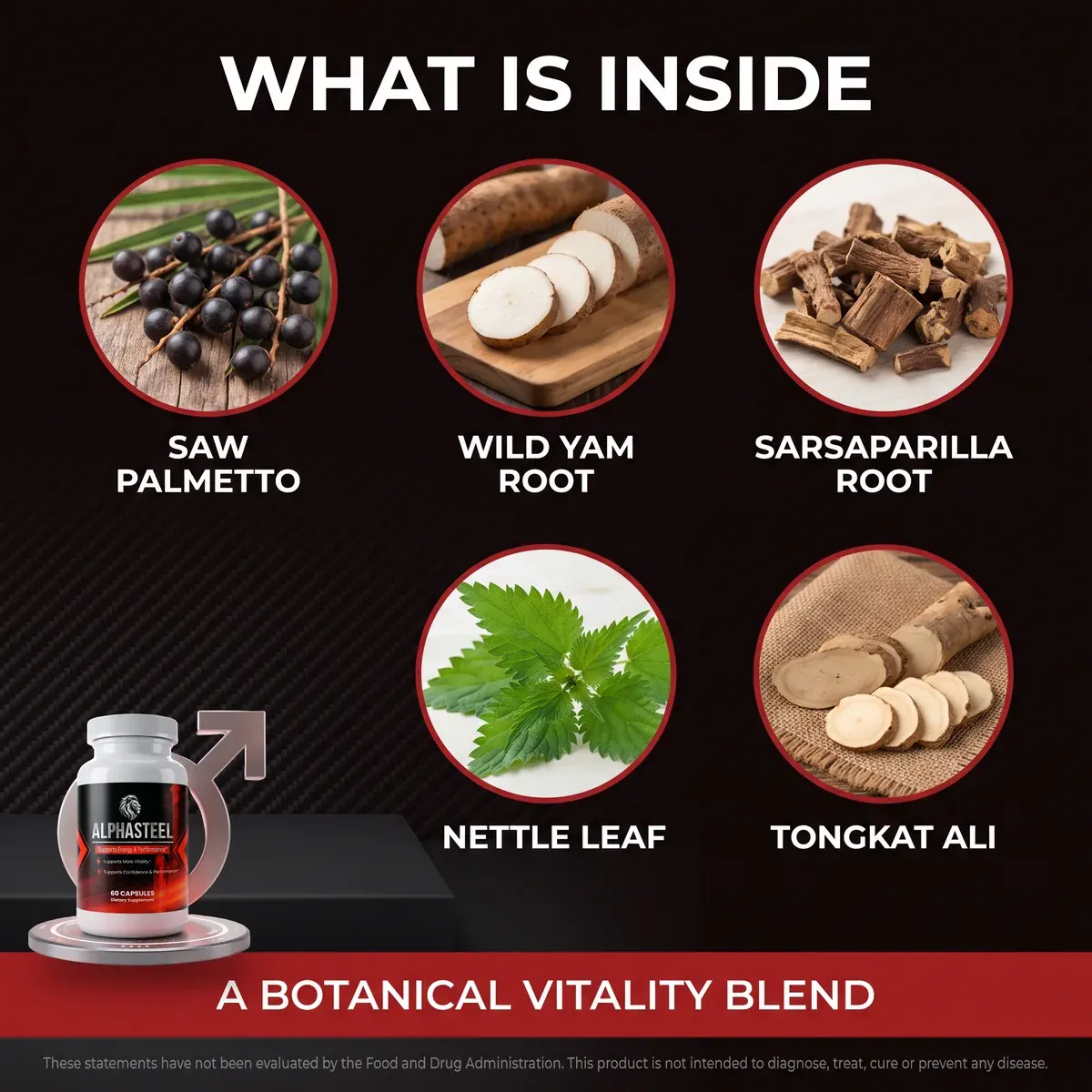
Open almost any men’s supplement page and you will find the same structure: a list of ingredients, and beside each one a sentence that begins “studies show”. The AlphaSteel panel prints seven rows, and it is fair to say that every one of the seven plants has been studied by someone. Saw palmetto has been tested in large trials of men with urinary symptoms. Tongkat ali has small trials in men with testosterone and questionnaires as outcomes. Horny goat weed, nettle, wild yam, sarsaparilla and boron each have their own, thinner literatures. The other posts on this blog go through several of those row by row, and this one will not repeat them.
The question here is a different one. It is whether a set of separate findings about separate ingredients can be added up into a finding about the capsule. Three things have to hold for that to work. The preparation in the study has to resemble the preparation in the capsule. The amount in the study has to resemble the amount in the capsule. And the ingredients have to behave together the way they behave alone. The first two can be checked against the panel, at least in part. The third can only be checked by testing the combination, which is exactly the test nobody has run on this formula.
What “each ingredient has a study” does and does not say
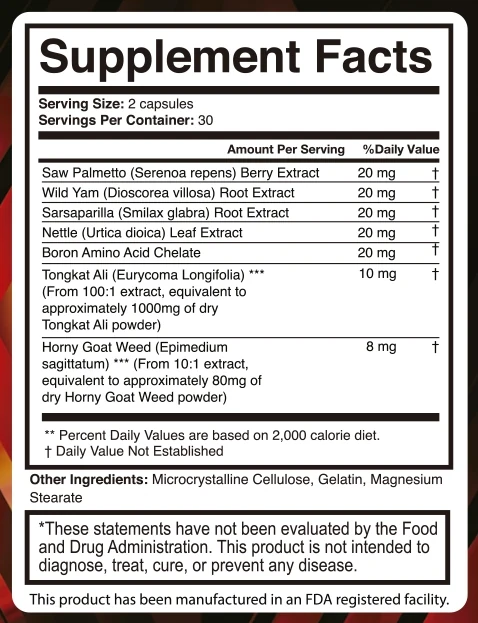
A plain statement of fact first, because the rest of the post rests on it. The AlphaSteel Supplement Facts panel lists seven actives, at 20, 20, 20, 20, 20, 10 and 8 mg per serving of two capsules. The supplement facts page and the other posts here say the same thing about the research: what is cited is on single ingredients, and none of it is a trial of the finished product. That is not a complaint peculiar to this capsule. It is true of nearly every product in the category. It needs saying before any list of citations gets read as though it were a verdict.
The phrase “has a study” hides four separate gaps. The study may have used a different part of the plant, a different kind of extract, a different amount or a different group of people. It may also have measured something other than what the front of the bottle says. A trial of saw palmetto in men with urinary symptoms is a real trial of saw palmetto, and it tells you nothing directly about energy, confidence or vitality. Each of those gaps is small enough to wave through on its own. Stack them across seven rows and the claim that the whole formula is “backed by research” stops meaning much.
None of that says the capsule does nothing. It says the evidence cannot yet say either way at the level of the formula, and the honest position for a reader is to hold the question open.
The nearest combination trials, and what they tested
The best-documented combination in the saw palmetto literature is a fixed product from one maker, named in the papers as PRO 160/120. Each capsule holds 160 mg of a saw palmetto fruit extract (called WS 1473) and 120 mg of a nettle root extract (WS 1031), and the trials gave two capsules a day.
Two trials carry most of the weight. In the first, Sökeland and Albrecht randomised 543 men with early-stage benign prostatic hyperplasia (BPH) to two capsules of PRO 160/120 or one capsule of finasteride a day, double-blind and double-dummy, for 48 weeks (Sökeland 1997). The main outcome was the change in peak urinary flow at week 24, and it rose by 1.9 mL/s on the herbal product and 2.4 mL/s on finasteride. On the International Prostate Symptom Score (IPSS), the herbal group went from 11.3 to 8.2 at 24 weeks and 6.5 at 48 weeks; the finasteride group went from 11.8 to 8.0 and 6.2. The authors called the two treatments equivalent. A later analysis of 431 of those men found the same pattern whether the prostate was small or large (Sökeland 2000, BJU International).
In the second, Lopatkin and colleagues randomised 257 men to PRO 160/120 or placebo. After a two-week single-blind placebo run-in, the men were treated double-blind for 24 weeks, and the IPSS fell by 6 points on the combination and by 4 on placebo (P = 0.003, one-tailed) (Lopatkin 2005, World Journal of Urology). Every man then took PRO 160/120 openly for another 24 weeks, and a follow-up report on 219 of them found the IPSS 53 per cent lower at week 96 (Lopatkin 2007). That last stage had no comparison group at all, so it cannot say how much of the fall was the product.
These are real trials, published in urology journals, and they are the strongest formula-level evidence that any of the seven plants on this label has. They also show how narrow that kind of evidence is, which is the point of the next section.
Why those trials do not describe this label
Set the product in those trials beside the AlphaSteel panel and four differences show up at once.
| PRO 160/120 trials | AlphaSteel panel | |
|---|---|---|
| Saw palmetto | 160 mg of a named fruit extract (WS 1473) per capsule; 320 mg a day | 20 mg of berry extract per serving; extract not identified |
| Nettle | 120 mg of a named nettle root extract (WS 1031) per capsule; 240 mg a day | 20 mg of nettle leaf extract per serving |
| Everything else | Nothing else in the product | Five more rows: wild yam, sarsaparilla, a boron chelate, tongkat ali, horny goat weed |
| People and outcomes | Men with BPH and urinary symptoms; urine flow and IPSS | Front label speaks of energy, male vitality and confidence; no trial of this capsule measures them |
| Comparator | Finasteride in one trial, placebo in the other | None |
| Saw palmetto plus nettle, per day | 560 mg (2 × (160 + 120) mg) | 40 mg (20 + 20 mg) |
Amounts are from the abstracts of the cited papers. The 560 mg and 40 mg totals are this post’s arithmetic, the daily amount of the two extracts added together in each case.
The nettle is a different part. The nettle in those trials is root, and the panel says leaf. Root and leaf are separate materials with separate literatures. The review of nettle root is about prostate complaints, and it concludes that the size and significance of the effect still have to be established (Chrubasik 2007). Nothing in it describes a leaf extract.
The amounts are far apart. Two capsules of PRO 160/120 carry 560 mg of the two extracts. The two matching AlphaSteel rows carry 40 mg. That is 14 times as much in the trials, or 16 times for saw palmetto alone and 12 times for the nettle. There is a fair objection, which is that a more concentrated extract could do more per milligram. The panel does not say how either of these extracts was made or what it contains, so the objection cannot be tested from the label.
The people and the outcomes differ. The men were being treated for urinary symptoms and were assessed on urine flow and a urinary symptom score. AlphaSteel’s front label makes support statements about energy, male vitality and confidence. A good result on the first list does not carry over to the second, and no study of this capsule exists to bridge them.
The extract is named in one and not the other. The trial reports name the product, and Lopatkin’s names each of the two extracts by code. The label prints a plant, a part and a weight, and for two rows a ratio. That is normal for the category, and it is also why a trial of one named extract cannot simply be assumed to apply to an unnamed one.
None of this makes the trials irrelevant. It makes them evidence about a product that is not the one on the shelf beside it. If the nettle in a capsule were the same root extract at the same dose, the argument would look different.
What a pooled look at combinations found
The clearest overview is the 2023 Cochrane review of saw palmetto for urinary symptoms (Franco 2023). It included 27 studies and 4,656 men. Nineteen studies compared saw palmetto alone with placebo, and eight compared saw palmetto in combination with other herbal agents against placebo.
For saw palmetto alone, the reviewers found little to no difference in urinary symptoms at three to six months, a mean difference of −0.90 IPSS points across nine studies and 1,681 men, and rated that high-certainty. For the combinations, four studies with 460 men gave a mean difference of −2.41 points (95 per cent confidence interval −4.54 to −0.29). The reviewers described that as little to no difference too, and rated it low-certainty. Their closing statement is worth quoting closely: saw palmetto alone provides little to no benefit for these symptoms, and “there is more uncertainty about the role of Serenoa repens in combination with other phytotherapeutic agents.” The US National Center for Complementary and Integrative Health, summarising the same review, says definite conclusions could not be reached about combinations of herbs that include saw palmetto.
Two cautions on reading the larger-looking combination figure. It rests on four studies, and the phrase in the review is “different phytotherapeutic agents that include Serenoa repens”, so the pooled number averages over unlike products. It is a statement about saw palmetto combinations in men with urinary symptoms. It says nothing about tongkat ali, horny goat weed or boron, none of which was part of the question.
Additive, synergistic or nothing: three ways seven rows can behave
Suppose two ingredients each do something on their own at the amount that was studied. If their effects are simply additive, the capsule’s effect is the sum of the two, each counted at the amount actually in the capsule. If they are synergistic, the pair does more than that sum. If one gets in the way of the other, the pair does less.
Herbal medicine has a long tradition of arguing for synergy, and there is a scientific literature on it. Williamson’s 2001 review gathers experimental and clinical examples, both among the constituents of one plant’s extract and between different herbs in a formula, and it discusses positive and negative interactions alike (Williamson 2001). Wagner and Ulrich-Merzenich’s 2009 review looks at how modern molecular methods might explain claims of synergy, and it states that real synergy can be verified through detailed pharmacological investigations and controlled clinical studies (Wagner and Ulrich-Merzenich 2009). That is the standard, and it is worth noticing that it asks for a test of the specific combination.
Three consequences follow for a seven-row capsule.
- If effects are additive, read each row at its own amount. A row printed at 20 mg is not a 320 mg exposure because it sits beside six other rows. Adding rows to a capsule does not raise any one of them.
- If synergy is claimed, it belongs to a specific set at specific amounts. A finding for one pair of extracts cannot be borrowed for a different pair, or for the same plants in different preparations.
- Even the sabal and nettle trials cannot separate the two. As their abstracts describe them, the comparators were finasteride and placebo, not each extract alone. To tell additive from synergistic you need arms for A, for B and for A plus B, which is called a factorial design, and this literature does not have one for the pair.
Interaction can also cut the other way. Williamson’s review is explicit that the interactions it covers include negative ones. Seven ingredients make twenty-one possible pairs, and the searches for this post found no published study of all seven together.
Seven small rows in one capsule
Added together, the seven printed amounts come to 118 mg per serving, which is the arithmetic on the panel, since the panel gives no total of its own. A serving is two capsules. The rest of each capsule is the shell and the other ingredients printed beneath the panel: microcrystalline cellulose, gelatin and magnesium stearate.
The design question this raises is one of dilution. For most rows the printed amount is a fraction of what the research used, and putting more rows into the capsule does not change that. The formula does not pool seven small exposures into one large one. Each row stays where the panel puts it.
What a formula-level test looks like is worth seeing once, and there is a small example in the tongkat ali literature. Udani and colleagues randomised 30 men aged 40 to 65 to a 300 mg daily dose of a two-extract product, a freeze-dried tongkat ali water extract with a Polygonum minus extract, or a matching placebo, for 12 weeks (Udani 2014). Sixty-two men were screened, 15 were randomised to each group, and four left early, leaving 12 on the product and 14 on placebo for the analysis of completers. The men on the product scored better on several sexual performance and well-being questionnaires than those on placebo, and adverse events were similar in the two groups. The paper’s own text calls it a pilot study.
That is what evidence for a formula looks like: one defined product, one dose, one comparator, validated questionnaires, and a stated number of men lost along the way. It is also small, it is completers only, and the product was a different pair of extracts at 300 mg a day, where the AlphaSteel panel prints 10 mg for tongkat ali and 8 mg for horny goat weed. It supports a narrow statement about that product. It cannot be moved across to this one.
Why the label prints no marker assay of the whole capsule
A marker compound is a chemical that stands in for quality. Measure it in an extract and you learn something about the identity and strength of the extract. Li and colleagues, reviewing the field, note that the ideal marker would be the component that produces the therapeutic effect, but that for most herbal medicines the therapeutic components have not been fully worked out or are not easily monitored (Li 2008).
The AlphaSteel panel prints a weight for every row and a ratio with a dry-herb equivalent for two of them. It prints no marker content for any row, and no assay of the finished capsule. That is a statement about what went into the capsule by weight, and it is not a laboratory report on what came out. There is nothing unusual about it, and it matters for this comparison because the published evidence suggests that products sold under one plant name can differ a great deal.
- Saw palmetto. Habib and Wyllie compared 14 brands of saw palmetto extract and found that many differed significantly in their proportions of free fatty acids, esters and glycerides, which they said might affect clinical benefit (Habib 2004). Booker and colleagues characterised 57 saw palmetto products and found a high degree of heterogeneity in total fatty acids and in nine individual fatty acids (Booker 2014).
- Tongkat ali. A metabolite-profiling study comparing an authentic tongkat ali extract with some commercial products found differences in their chemical fingerprints, including in a quassinoid, 13,21-dihydroeurycomanone, which was more abundant in the authentic root (Serag 2023).
- Extracts in general. A consensus guideline on characterising plant extracts in research states the problem plainly: extracts are multicomponent mixtures whose composition varies with the method of preparation and the plant material, and that variability affects the reproducibility and interpretation of clinical research (Heinrich 2022).
For a capsule with seven extracts, those questions multiply by seven, and a trial of one named extract cannot answer them for another. The practical version is a question worth putting to any seller of any capsule: whether there is a certificate of analysis for each extract, covering identity and marker content, and one for the finished lot. This website cannot see those documents and does not claim to.
How to weigh a claim that each ingredient has a study
A five-question test can be run on any “has a study” line, for this capsule or another. It takes a couple of minutes with the PubMed abstract open.
- Which preparation? Same plant, same part, same kind of extract? Berry versus root, leaf versus root, water extract versus alcohol extract, all count as different answers.
- Which dose? Compare the milligrams a day in the study with the milligrams a day on the panel, and note when the study gave a named extract and the panel gives an unnamed one.
- Which people? Men with urinary symptoms, healthy volunteers, menopausal women, people with type 2 diabetes and rats are five different starting points.
- Which outcome? Urine flow, a testosterone level, a mood scale and a libido item are not the same thing as energy or confidence, and a lab marker is not a symptom.
- Compared with what? A placebo, a drug, or nothing? A single group measured before and after cannot separate the product from everything else that changed. The post on placebo arms goes through that problem in detail.
What would count as formula-level evidence? A randomised, placebo-controlled trial of the finished capsule, at the printed dose, in men like the ones who buy it, with the outcomes chosen in advance, and with the men who dropped out accounted for. No such trial has been published for this capsule. Until one is, the fair way to read the seven rows is one at a time, at the amounts the panel prints, beside the research that used those amounts, which is what the row-by-row posts on this blog try to do. The saw palmetto post and the tongkat ali post set two of the rows against their trials.
AlphaSteel is a dietary supplement, not a medicine. It is not a treatment for a prostate condition, urinary symptoms, erectile dysfunction or low testosterone, and it is not a substitute for prescribed medicine. The research cited here concerns other products in other men. If you take a prescription or have a medical condition, speak to your prescriber before use, as the label itself asks.
Sources behind this AlphaSteel article
- Sökeland J, Albrecht J. [Combination of Sabal and Urtica extract vs. finasteride in benign prostatic hyperplasia (Aiken stages I to II). Comparison of therapeutic effectiveness in a one year double-blind study]. Urologe A. 1997;36(4):327-33. doi:10.1007/s001200050106 PMID 9340898. https://pubmed.ncbi.nlm.nih.gov/9340898/
- Sökeland J. Combined sabal and urtica extract compared with finasteride in men with benign prostatic hyperplasia: analysis of prostate volume and therapeutic outcome. BJU Int. 2000;86(4):439-42. doi:10.1046/j.1464-410x.2000.00776.x PMID 10971268. https://pubmed.ncbi.nlm.nih.gov/10971268/
- Lopatkin N, Sivkov A, Walther C, Schläfke S, Medvedev A, Avdeichuk J, et al. Long-term efficacy and safety of a combination of sabal and urtica extract for lower urinary tract symptoms: a placebo-controlled, double-blind, multicenter trial. World J Urol. 2005;23(2):139-46. doi:10.1007/s00345-005-0501-9 PMID 15928959. https://pubmed.ncbi.nlm.nih.gov/15928959/
- Lopatkin N, Sivkov A, Schläfke S, Funk P, Medvedev A, Engelmann U. Efficacy and safety of a combination of Sabal and Urtica extract in lower urinary tract symptoms: long-term follow-up of a placebo-controlled, double-blind, multicenter trial. Int Urol Nephrol. 2007;39(4):1137-46. doi:10.1007/s11255-006-9173-7 PMID 18038253. https://pubmed.ncbi.nlm.nih.gov/18038253/
- Franco JV, Trivisonno L, Sgarbossa NJ, Alvez GA, Fieiras C, Escobar Liquitay CM, et al. Serenoa repens for the treatment of lower urinary tract symptoms due to benign prostatic enlargement. Cochrane Database Syst Rev. 2023;6(6):CD001423. doi:10.1002/14651858.CD001423.pub4 PMID 37345871. https://pubmed.ncbi.nlm.nih.gov/37345871/
- Chrubasik JE, Roufogalis BD, Wagner H, Chrubasik S. A comprehensive review on the stinging nettle effect and efficacy profiles. Part II: urticae radix. Phytomedicine. 2007;14(7-8):568-79. doi:10.1016/j.phymed.2007.03.014 PMID 17509841. https://pubmed.ncbi.nlm.nih.gov/17509841/
- Williamson EM. Synergy and other interactions in phytomedicines. Phytomedicine. 2001;8(5):401-9. doi:10.1078/0944-7113-00060 PMID 11695885. https://pubmed.ncbi.nlm.nih.gov/11695885/
- Wagner H, Ulrich-Merzenich G. Synergy research: approaching a new generation of phytopharmaceuticals. Phytomedicine. 2009;16(2-3):97-110. doi:10.1016/j.phymed.2008.12.018 PMID 19211237. https://pubmed.ncbi.nlm.nih.gov/19211237/
- Udani JK, George AA, Musthapa M, Pakdaman MN, Abas A. Effects of a proprietary freeze-dried water extract of Eurycoma longifolia (Physta) and Polygonum minus on sexual performance and well-being in men: a randomized, double-blind, placebo-controlled study. Evid Based Complement Alternat Med. 2014;2014:179529. doi:10.1155/2014/179529 PMID 24550993. https://pubmed.ncbi.nlm.nih.gov/24550993/
- Li S, Han Q, Qiao C, Song J, Lung Cheng C, Xu H. Chemical markers for the quality control of herbal medicines: an overview. Chin Med. 2008;3:7. doi:10.1186/1749-8546-3-7 PMID 18588699. https://pubmed.ncbi.nlm.nih.gov/18588699/
- Habib FK, Wyllie MG. Not all brands are created equal: a comparison of selected components of different brands of Serenoa repens extract. Prostate Cancer Prostatic Dis. 2004;7(3):195-200. doi:10.1038/sj.pcan.4500746 PMID 15289814. https://pubmed.ncbi.nlm.nih.gov/15289814/
- Booker A, Suter A, Krnjic A, Strassel B, Zloh M, Said M, et al. A phytochemical comparison of saw palmetto products using gas chromatography and 1H nuclear magnetic resonance spectroscopy metabolomic profiling. J Pharm Pharmacol. 2014;66(6):811-22. doi:10.1111/jphp.12198 PMID 24417505. https://pubmed.ncbi.nlm.nih.gov/24417505/
- Serag A, Zayed A, Mediani A, Farag MA. Integrated comparative metabolite profiling via NMR and GC-MS analyses for tongkat ali (Eurycoma longifolia) fingerprinting and quality control analysis. Sci Rep. 2023;13(1):2533. doi:10.1038/s41598-023-28551-x PMID 36781893. https://pubmed.ncbi.nlm.nih.gov/36781893/
- Heinrich M, Jalil B, Abdel-Tawab M, Echeverria J, Kulić Ž, McGaw LJ, et al. Best practice in the chemical characterisation of extracts used in pharmacological and toxicological research: the ConPhyMP guidelines. Front Pharmacol. 2022;13:953205. doi:10.3389/fphar.2022.953205 PMID 36176427. https://pubmed.ncbi.nlm.nih.gov/36176427/
- National Center for Complementary and Integrative Health. Saw palmetto. Page read September 27, 2026. https://www.nccih.nih.gov/health/saw-palmetto
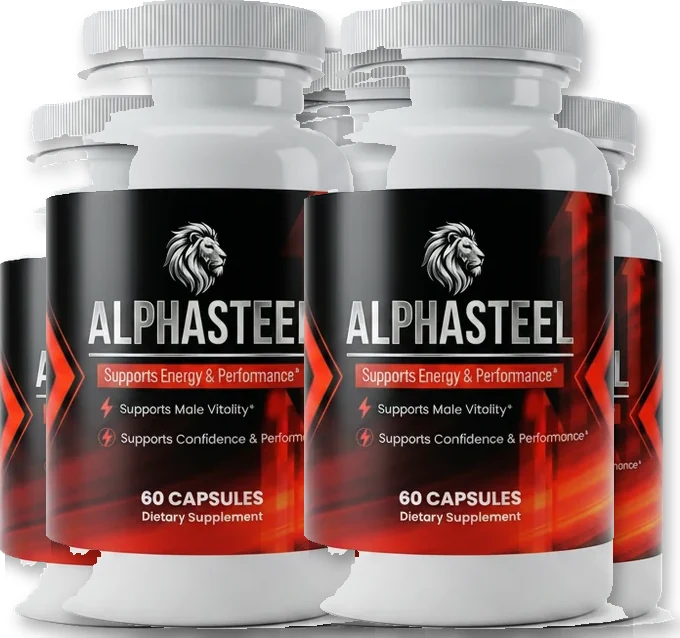
AlphaSteel, with every amount printed on the label
Two capsules a day, 60 capsules to a bottle, and seven actives with their milligrams on the panel.
Order AlphaSteel