AlphaSteel Official Website › Blog › Saw Palmetto At 20 mg
Ingredient rowSaw Palmetto Berry Extract at 20 mg: Where the AlphaSteel Row Sits Beside the Trials
The AlphaSteel panel prints saw palmetto (Serenoa repens) berry extract at 20 mg per serving of two capsules. The published trials on saw palmetto gave 320 mg a day and, in one, up to 960 mg a day, which is sixteen to forty-eight times the label amount. Those trials were in men with urinary symptoms, and the large ones found saw palmetto no better than placebo.
This post sets the label row beside that research, says what each side can and cannot show, and leaves the reading to you.
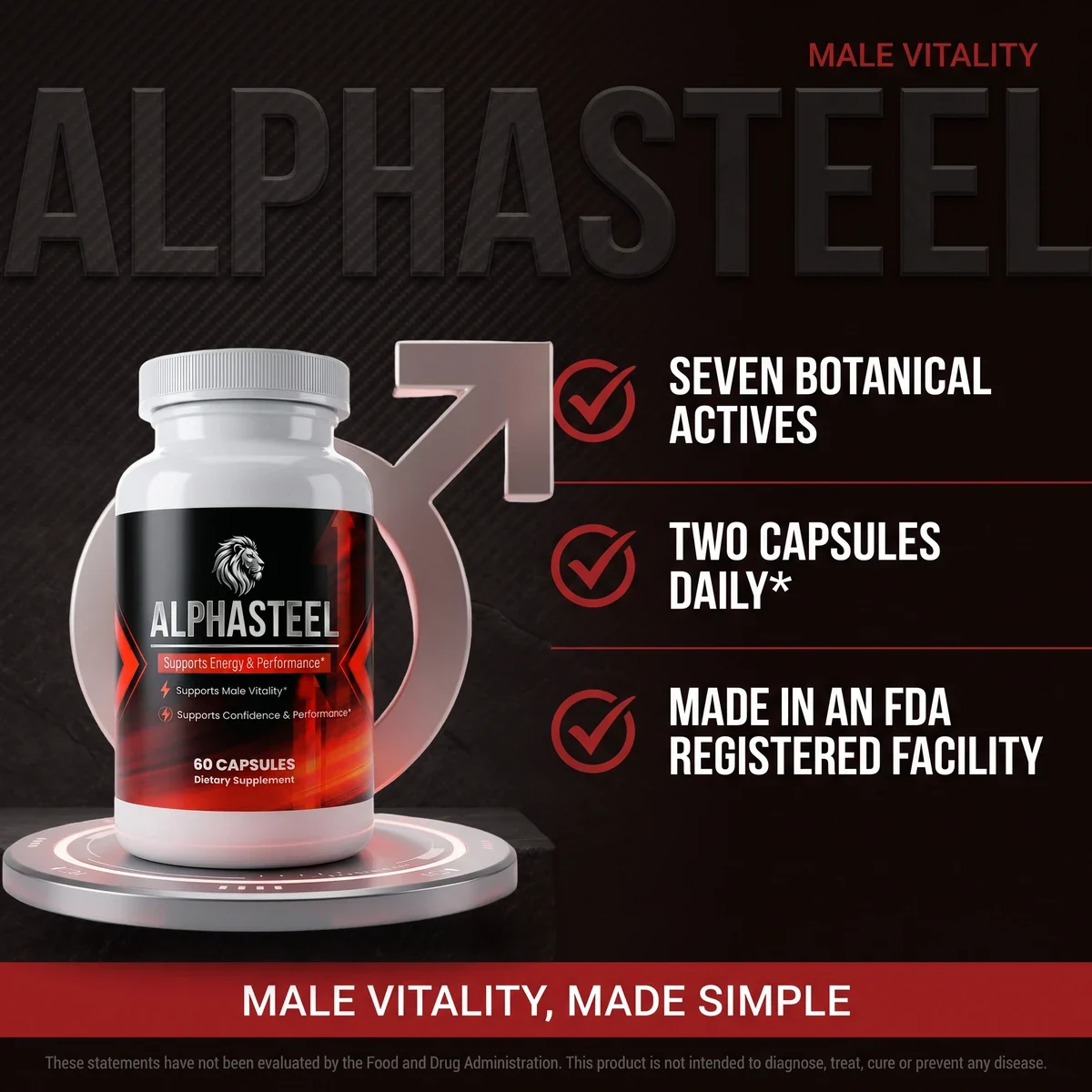
- 20 mg. The saw palmetto row on the panel: berry extract, per two-capsule serving, first of seven rows.
- 320 to 960 mg. What the large trials gave each day, so the row is one sixteenth to one forty-eighth of that.
- Urinary symptoms. The men in those trials were studied for urinary symptoms, not for energy or vitality, so the results do not transfer to the label lines.
- Safety. A systematic review of 40 reports found adverse events mild and similar to placebo, with no drug interactions reported.
Where the saw palmetto row sits on the panel
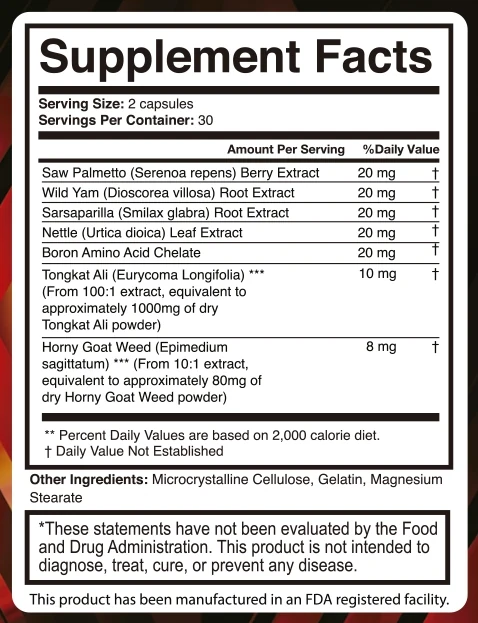
Saw palmetto is the first ingredient on the AlphaSteel Supplement Facts panel. The row reads “Saw Palmetto (Serenoa repens) Berry Extract”, then 20 mg, then a dagger that stands for Daily Value not established. It is one of five rows printed at 20 mg; the other four are wild yam root, sarsaparilla root, nettle leaf and a boron chelate, and the two remaining rows, tongkat ali and horny goat weed, are smaller.
Twenty milligrams is the amount in a serving, and a serving is two capsules. Over a 30-serving bottle that adds up to 600 mg of saw palmetto extract. Nothing on the panel says how the extract was made, what it was standardised to, or what it contains. Those gaps are normal for a label in this category, and they matter for the comparison below.
Saw palmetto also happens to be the ingredient on this panel with the most published human research, so it is a good one to read slowly. It is a large literature, and it is mostly about one question, which is not the question on the front of the bottle.
What a saw palmetto berry extract is
Saw palmetto is a palm, and the part used is the berry. What goes into a supplement is an extract of it, and much of the clinical research uses a lipidosterolic extract, meaning one made with a solvent that pulls out the oily fraction of the berry. That fraction is mostly fatty acids. In the analysis of one widely studied extract, sold as Permixon, fatty acids made up about 90 per cent of the material and about 80 per cent was free fatty acids, chiefly oleic and lauric acids at roughly 65 per cent together, with linoleic and myristic acids at about 15 per cent (Raynaud 2002).
That is a description of one product. Another extract from the same berries, made with a different solvent or a different process, will have a different profile, and a label that prints only “berry extract” does not tell you which kind is in the capsule. The AlphaSteel panel is in that position. It names the plant, the species and the part, which is more than a bare trade name, and it gives the weight. It does not print a fatty-acid figure or an extract ratio, which the two extracts at the bottom of the panel do carry.
What the laboratory work found, and where it stops
Most people who have read about saw palmetto have met the words “5-alpha reductase”. That is the enzyme that turns testosterone into dihydrotestosterone, and it is the target of the prescription drug finasteride. The laboratory case for saw palmetto begins there.
In cells engineered to make the two forms of the enzyme, the free fatty acids from the extract inhibited both forms, while the sterols, alcohols and esterified fatty acids did not. Lauric and myristic acids were active on both forms, and the long unsaturated acids were much more active on the type 1 form (Raynaud 2002). In primary cultures of human cells, the same extract at 10 micrograms per millilitre changed the structure of prostate cells, raised their rate of programmed cell death and inhibited both enzyme forms in them, with little or no such effect in cells from skin, kidney, breast and other tissues (Bayne 2000).
A third laboratory paper is less flattering, and it is worth putting next to the other two. Using human prostate tissue as the enzyme source, it measured how much of each product was needed to halve the enzyme’s activity: 1 nanogram per millilitre for finasteride against 5,600 for Permixon. In a seven-day trial in men, finasteride lowered serum dihydrotestosterone and Permixon did not, and the authors concluded it was unlikely that the plant extracts would shrink the prostate by blocking androgen action (Rhodes 1993).
These findings are not easy to reconcile, and the clinical trials below do not settle it either. What they show together is the general lesson about laboratory results: an extract can do something in a dish at a concentration nobody has shown is reached in a man’s body. The laboratory work explains why people looked. It does not tell you what a capsule does.
What the men’s trials gave, and what they found
The clinical work is about lower urinary tract symptoms in older men, the kind attributed to prostate enlargement. That is the population saw palmetto has been tested in, and the results are worth knowing whatever your reason for reading the label.
The most quoted trial in the field was published in the New England Journal of Medicine. It gave 225 men over 49 with moderate-to-severe symptoms either saw palmetto extract, 160 mg twice a day, or placebo, for a year. It found no significant difference in symptom score, urinary flow rate, prostate size, residual urine, quality of life or PSA, and side effects were similar in both groups (Bent 2006).
A later trial asked whether the dose had been too low. It enrolled 369 men aged 45 or older and gave saw palmetto extract or placebo at 320 mg a day, raised to 640 mg at 24 weeks and to 960 mg at 48 weeks, up to 72 weeks in all. Symptom scores fell by 2.20 points on saw palmetto and by 2.99 on placebo, a difference of 0.79 points in placebo’s favour. Saw palmetto was no better than placebo on any secondary outcome, sexual function scores included, and no adverse effects were clearly attributable to it (Barry 2011).
A Cochrane review pooled the placebo-controlled work. It counted 27 studies and 4,656 participants across all comparisons, of which 19 studies compared saw palmetto alone with placebo, and it concluded that saw palmetto alone gives little to no benefit for men with these symptoms. At three to six months the symptom score difference was 0.90 points on a 35-point scale, and at 12 to 17 months it was 0.07 points; the authors rated the certainty of both findings as high. Adverse events were about the same as placebo, with a risk ratio of 1.01 (Franco 2023).
One older trial deserves a fair mention because it points the other way. It randomised 1,098 men to 320 mg of Permixon or 5 mg of finasteride for six months. Both lowered the symptom score, by 37 and 39 per cent, and both improved flow. Finasteride cut prostate volume by 18 per cent and PSA by 41 per cent; Permixon changed volume by 6 per cent and did not change PSA. Permixon fared better on a sexual function questionnaire, with fewer complaints of reduced libido and impotence (Carraro 1996). That trial had no placebo arm, and the later placebo-controlled trials found their placebo groups improved as much as the saw palmetto groups, so its headline figures cannot be read as an effect of the extract alone.
The 20 mg row beside those amounts
Set the label against the trials on the one measure that can be compared, milligrams of extract a day, and the gap is wide. Two capsules of AlphaSteel carry 20 mg of saw palmetto extract. The trials gave 320 mg a day as their standard dose.
| Source | What was given | Men and duration | Multiple of the 20 mg row |
|---|---|---|---|
| Bent 2006 | 160 mg twice a day, 320 mg in all | 225 men, one year | 16 times |
| Carraro 1996 | 320 mg a day | 1,098 men, six months | 16 times |
| Barry 2011 | 320, then 640, then 960 mg a day | 369 men, up to 72 weeks | 16 to 48 times |
| AlphaSteel label | 20 mg per two capsules | No published trial of the finished product | 1 time |
Amounts are from the abstracts of the cited papers. Multiples are this desk’s arithmetic: the trial daily amount divided by 20 mg.
Two things follow from the table. The first is that the label row is a small fraction of any amount studied, which is a fact about the label and not a judgement on the formula. The second is that the trials were of a single extract on its own, and AlphaSteel is a seven-ingredient formula that nobody has trialled as a finished product. This website has found no published trial of AlphaSteel, and it says so at the foot of every page.
There is a fair objection to the arithmetic. If the extract in the capsule were far more concentrated than the extract in the trials, 20 mg of it could carry more than its weight suggests. The panel does not say, so the objection cannot be tested from the label. The honest position is that the row is small beside the research amounts, that its concentration is unknown, and that the comparison stops there.
AlphaSteel, with every amount on the label
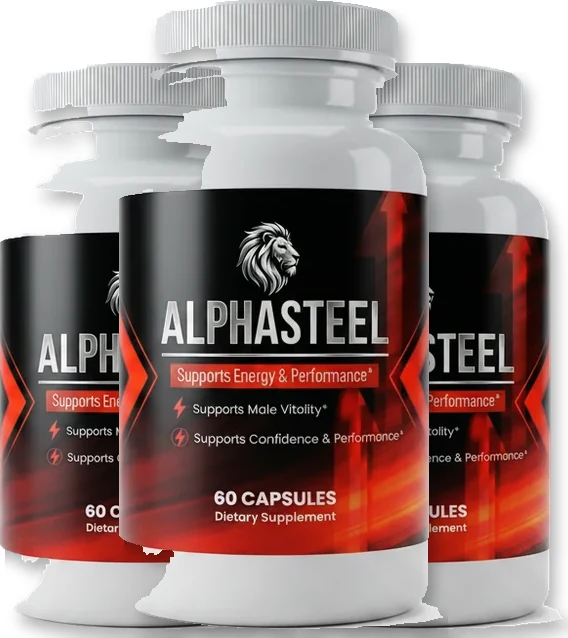
Two capsules a day, 60 to a bottle. Seven actives with their milligrams printed, tongkat ali and horny goat weed with their ratios. $49 to $79 a bottle and 60 days from purchase to change your mind.
Order AlphaSteelWhat the label does not tell you about this extract
A shopper reading the saw palmetto row can ask four things that the panel does not answer. What solvent was used? What is the fatty-acid content? Is there a ratio, as there is on the tongkat ali and horny goat weed rows? Which batch of berries did it come from? The other two extract rows on the panel state a ratio; this one states none, and a ratio would not have answered the fatty-acid question anyway, as the post on the 100:1 tongkat ali line explains.
Questions like these are worth putting to the seller before you order, through the site’s contact page. This website cannot see the supplier’s certificate of analysis and does not claim to, and the lot number and certificate reference printed on its pages are for tracing a bottle, not laboratory proof.
What the safety review says
Saw palmetto has one of the better safety records among the herbs on this panel. A systematic review of adverse events pulled together 40 reports: 26 randomised trials, 4 non-randomised trials, 6 uncontrolled trials and 4 case reports or series. It found adverse events mild and similar to placebo, the commonest being abdominal pain, diarrhoea, nausea, fatigue, headache, decreased libido and rhinitis. Serious events such as death and cerebral haemorrhage turned up in isolated case reports and spontaneous reporting data, but the reviewers judged causality questionable, and they found no reports of drug interactions (Agbabiaka 2009).
That is reassuring and it has limits. The review itself asks for better reporting of adverse events, the trials were of single extracts at their own doses, and none of them tells you how saw palmetto combines with six other ingredients. The label’s own caution is the practical rule: do not exceed the recommended dose, and if you are pregnant or nursing, under 18 or have a known medical condition, check with a physician first. A man being treated for a prostate or hormone condition, or taking a prescription for it, has the clearest reason to raise the label with his prescriber, since saw palmetto is taken for the same part of the body. The interaction checklist goes through all seven rows.
One more practical point from the trials themselves. Bent and colleagues measured PSA and found no significant difference between saw palmetto and placebo over a year, and Carraro and colleagues saw no change in PSA on Permixon. That is useful context, but PSA is a test your clinician interprets, and any supplement you take belongs on the list you give them.
Reading the row sensibly
- Take the row for what it says. Twenty milligrams of a saw palmetto berry extract, in a formula sold under three support statements for energy, male vitality and confidence. The panel makes no claim about the prostate, and this website does not either.
- Do not borrow the trial results. Those trials were in men with urinary symptoms at 16 to 48 times the label amount, and the large ones found no advantage over placebo. They neither support nor undermine the label lines.
- Ask what is unknown. The extract type, the fatty-acid content and the batch specification are not printed. Ask for them rather than assume.
- Weigh the formula, not the row. Seven actives, no stimulant, two capsules a day, and a 60-day window from purchase to decide with your own experience. The ingredients page sets every row beside its research in one place.
If the size of the gap between label and trial is what struck you, the same comparison for the other rows is on the Supplement Facts page, and the how to take it page covers the routine. Saw palmetto is the one row where the published record is large enough that the label can be checked against it, and the answer, put plainly, is that the label amount is small and the record is mixed.
AlphaSteel is a dietary supplement, not a medicine. It is not a treatment for a prostate condition, urinary symptoms, erectile dysfunction or low testosterone, and it is not a substitute for prescribed medicine. The research cited here concerns saw palmetto on its own, at other amounts, in other men. Speak to your prescriber before use if you take any prescription.
Sources behind this AlphaSteel article
- Bent S, Kane C, Shinohara K, Neuhaus J, Hudes ES, Goldberg H, et al. Saw palmetto for benign prostatic hyperplasia. N Engl J Med. 2006;354(6):557-66. doi:10.1056/NEJMoa053085 PMID 16467543. https://pubmed.ncbi.nlm.nih.gov/16467543/
- Barry MJ, Meleth S, Lee JY, Kreder KJ, Avins AL, Nickel JC, et al. Effect of increasing doses of saw palmetto extract on lower urinary tract symptoms: a randomized trial. JAMA. 2011;306(12):1344-51. doi:10.1001/jama.2011.1364 PMID 21954478. https://pubmed.ncbi.nlm.nih.gov/21954478/
- Franco JV, Trivisonno L, Sgarbossa NJ, Alvez GA, Fieiras C, Escobar Liquitay CM, et al. Serenoa repens for the treatment of lower urinary tract symptoms due to benign prostatic enlargement. Cochrane Database Syst Rev. 2023;6(6):CD001423. doi:10.1002/14651858.CD001423.pub4 PMID 37345871. https://pubmed.ncbi.nlm.nih.gov/37345871/
- Carraro JC, Raynaud JP, Koch G, Chisholm GD, Di Silverio F, Teillac P, et al. Comparison of phytotherapy (Permixon) with finasteride in the treatment of benign prostate hyperplasia: a randomized international study of 1,098 patients. Prostate. 1996;29(4):231-40; discussion 241-2. doi:10.1002/(SICI)1097-0045(199610)29:4<231::AID-PROS4>3.0.CO;2-E PMID 8876706. https://pubmed.ncbi.nlm.nih.gov/8876706/
- Raynaud JP, Cousse H, Martin PM. Inhibition of type 1 and type 2 5alpha-reductase activity by free fatty acids, active ingredients of Permixon. J Steroid Biochem Mol Biol. 2002;82(2-3):233-9. doi:10.1016/s0960-0760(02)00187-5 PMID 12477490. https://pubmed.ncbi.nlm.nih.gov/12477490/
- Bayne CW, Ross M, Donnelly F, Habib FK. The selectivity and specificity of the actions of the lipido-sterolic extract of Serenoa repens (Permixon) on the prostate. J Urol. 2000;164(3 Pt 1):876-81. doi:10.1097/00005392-200009010-00065 PMID 10953171. https://pubmed.ncbi.nlm.nih.gov/10953171/
- Rhodes L, Primka RL, Berman C, Vergult G, Gabriel M, Pierre-Malice M, et al. Comparison of finasteride (Proscar), a 5 alpha reductase inhibitor, and various commercial plant extracts in in vitro and in vivo 5 alpha reductase inhibition. Prostate. 1993;22(1):43-51. doi:10.1002/pros.2990220107 PMID 8381228. https://pubmed.ncbi.nlm.nih.gov/8381228/
- Agbabiaka TB, Pittler MH, Wider B, Ernst E. Serenoa repens (saw palmetto): a systematic review of adverse events. Drug Saf. 2009;32(8):637-47. doi:10.2165/00002018-200932080-00003 PMID 19591529. https://pubmed.ncbi.nlm.nih.gov/19591529/
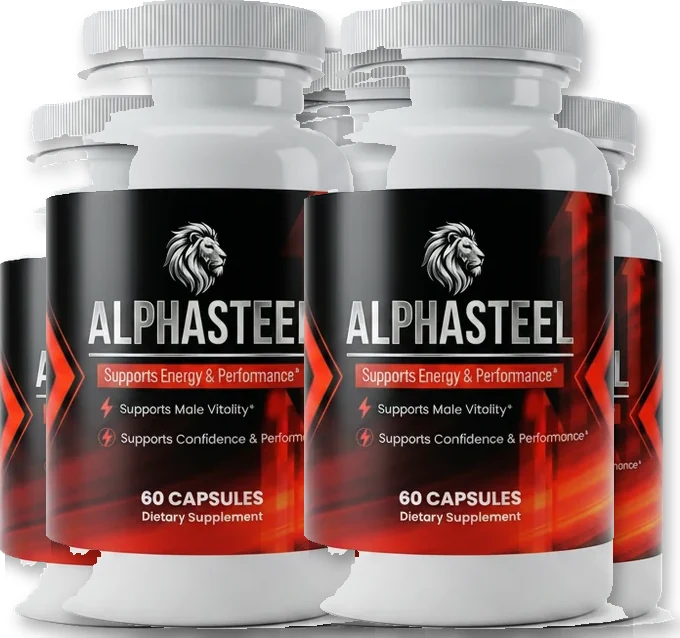
Order AlphaSteel, saw palmetto and all six others on the label
Two capsules a day, seven actives with their milligrams printed, and 60 days from purchase to decide.
$49 to $79 a bottle · free US shipping on three and six bottles · 60 days to change your mind
Order AlphaSteel On The Official Website60-day money-back guarantee · lot ALP-26/AL-7266 · payment on the seller’s checkout